Showing posts with label happiness. Show all posts

Tuesday, March 31, 2015

La Vie La Cage


Managed to catch La Cage Aux Folles by 9 Works Theatricals last Friday, and enjoyed it so much I simply had to do an encore for their final performance Sunday afternoon.

What to say, what to say, really?

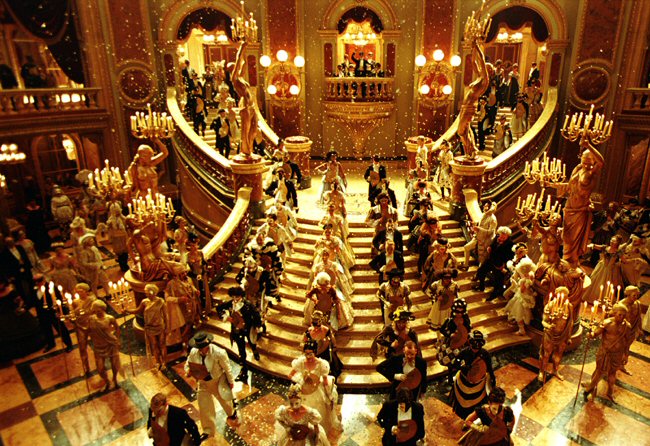
First off, I thought the production was appropriately splendiferous. The glitter, the glam, the shimmer and sparkle of the titular, legendary St. Tropez cabaret was captured in the fabulous costumes, dazzling confections created by members of the Fashion Designers Association of the Philippines. The stage sets by Mio Infante also evoked the ambience of the French Riviera, both in the interiors of Chez Georges et Albin, and the exteriors representing the resort town of St. Tropez.


The choreography and music were energetic, impressive, and riveting. The Cagelles - singly and as a group - fulfilled their promise in the opening song "We Are What We Are" that "you'll love us once you get to know us." Indeed, how could you not love the breathless tap dancing, the raunchy can-can, and the various individual vaudeville acts ( Hannah from Hamburg, j'adore!) ?

Indeed, La Cage gets off to a grand, fabulous start, and sets off from there like a psychotic horse towards a burning stable. 

But the musical play wouldn't have endured as a Broadway favorite if it didn't have more than razzle-dazzle to offer. And at its heart, La Cage is a very human story about perception, discrimination, and the things we do for love.


For those who haven't seen The Birdcage, the 1996 movie adaptation starring Robin Williams and Nathan Lane, a short synopsis would be in order. Georges and Albin (aka Zaza) are old lovers: the owner/emcee and the star, respectively, of the bawdy and beautiful Club La Cage - a famous cabaret featuring a drag queen revue. Georges has a son - Jean-Michel - from a brief fling with a beautiful English dancer named Sybil, who abandoned the boy to the care of the gay couple. Albin has, together with Georges, brought up Jean-Michel as his own flesh-and-blood son.

Jean-Michel comes home from university one day and announces that he is planning to get married to a beautiful girl named Anne Dindon. There's just a petit crise - Anne's father is the notoriously ultra-conservative Monsieur Edouard Dindon, the head of the Family, Tradition, and Morality Party that has threatened to sweep the Riviera clean of "immoral" establishments - such as the Club La Cage.

Anne's parents are coming over to meet their prospective in-laws, and Jean-Michel, eager to get their approval, wishes to present a "normal" family facade to the Dindons. That means inviting over his biological mother, Sybil, to pose as his father's wife. But more than that, it also means getting rid of Albin - and everything he represents - for one night.

Heartache - and hilarity - ensues.


In the role of Georges, Michael de Mesa is a revelation. Primarily because at some 50-plus, he remains a stunningly good-looking man. And secondly, the veteran actor brings a winsome accessibility to the character (which has been portrayed more gruffly in the original 1973 French film, various Broadway productions, and the Hollywood version with Williams). de Mesa's vocal range can be limited - he can be heard straining in some of the numbers, and in others his voice threatens to dip into nothingness in the low notes - but the emotion behind his delivery more than makes up for it. As a matter of fact, for the more emotional numbers like "Look Over There," de Mesa's breaking voice adds a definite resonance to the song.


Because I don't watch TV nor follow the local showbiz news, I don't know Steven Silva from chopped liver, but as the lovestruck but misguided son Jean-Michel, he brings a youthful joie de vivre. His pleasant tenor encapsulates the hopefulness and naivete of young love in the upbeat ditty "With Anne On My Arm." And while the character can come across as an ungrateful jerk and a spoiled brat, somehow Silva's pleasant good looks leaven Jean-Michel's less-than-stellar personality flaws.


As Jean-Michel's objet d'amour, Missy Macuja-Elizalde (alternating with Joni Galeste), brings a combination of fresh-faced innocence and a certain continental je ne sais quoi to the Dindon ingénue. Macuja also does double-duty as one of the chorus girls, and her balletic pedigree certainly comes across in her very physical dance routines. Lisa Macuja's little girl has grown into a voluptuous young woman, and in a rather risqué outfit later on in the show, young Elizalde's patrician features, coupled with her full figure, reminded me of the riveting sensuality of Manet's Olympia. It would be interesting to see her tackle more daring and mature roles in the future.


I'd be remiss if I didn't mention young but veteran thespian Noel Rayos. As Jacob, the family's unhinged butler/maid who desperately wishes for a chance to be a Cagelle, Rayos chews the scenery and threatens to upstage the principals as he struts through a series of hilarious costume changes. Jacob's entrances and exits are an outrageous parade of characters from various musicals, ranging from Little Orphan Annie to Cho-Cho San to the Mother Superior in Sound of Music. Rayos' Jacob is the comedy relief in a musical full of comic reliefs - a feat heroically performed by Hank Azaria as Agador in The Birdcage. Those are mighty big shoes to fill , but Rayos squeezes into those heels with madcap abandon, to the delight of the audience.


But of course, the star of the show is the Great Zaza/Albin, and Audie Gemora delivers a bravura performance. It's one of those transformative, transfixing star turns in which an actor inhabits the role so completely you stop seeing the actor and behold - and believe - the character instead. As Zaza la Diva, Gemora is all sassy bump n' grind burlesque, a confident queen holding court onstage. As the comically-fraught and hysterical Albin, he clearly takes his cue from Nathan Lane's take in The Birdcage, and he channels Lane's Albin not just through his acting and vocal performances, but he physically resembles Lane, as well. 


Gemora and de Mesa have great chemistry, and it was delightful to hear the audience so kilig over the lambings of this old gay couple. And that's one of the beautiful things about this musical: while it's very much a story involving gay men, it's not just a story about gay men. The longing, the love, the striving for acceptance while maintaining individual identity are universal themes, and the Gemora/de Mesa coupling manages to transcend the confines of sexual orientation. Their Georges and Albin come across to the appreciative audience as just another couple with their ups and downs, their silly little bickering and their big hurtful fights.

Just like "normal" people.

But while it takes two to tango, Gemora, a multi-awarded and veteran stage actor, is the heart and soul of this story, and delivers the evening's high point with his spare, wounded, powerful rendition of the musical's most famous song "I Am What I Am."


The song itself (from which the entire musical sprang) is familiar to anyone who's ever seen a drag revue or attended a Gay Pride parade, thanks to the commercial Gloria Gaynor version. But while the lyrics themselves speak of empowerment, in the context of the musical itself, "I Am What I Am" is more poignant, more vulnerable. Paradoxically, it's the pathos that makes the piece more potent.

There's a fascinating story about the song and how it gave birth to the whole musical:

Holt and Brown had produced the 1974 revival of Gypsy directed by Arthur Laurents, and they approached him with an offer to direct their new venture. Laurents was not a fan of drag or camp entertainment and thought Holt and Brown never would find enough investors to finance a gay-themed project at a time when, during the early years of the AIDS epidemic, homophobia was more intense than ever. He agreed only because Holt and Brown were close friends and he wanted them to remain on (Alan) Carr's payroll as long as possible, but his interest grew when he learned Harvey Fierstein and Jerry Herman had committed to the project.
According to Laurents, when he met with Fierstein and Herman for the first time, they had restored both the title and locale of the original play but had neither a script nor even an outline for the plot. All they had was the Herman song "I Am What I Am," and Laurents immediately envisioned it as an emotional outburst sung at the close of the first act. Laurents further claims that when he explained his concept to Fierstein and Herman, he inspired the direction they took in writing the musical. Herman tells a very different story in an interview included in the original cast CD. He claims that they were well into the collaboration when Fierstein arrived one day with an emotional fiery scene he had written for the end of Act I that included the words "I am what I am." Delighted, Herman asked to use the five words, boasting that he would have a song by morning, which he did.


It's no surprise that "I Am What I Am" has become a global anthem for gay pride. Its lyrics are affirmative, defiant, and empowering. Nevertheless, even in the creation of the musical, some concessions to the general heterosexual community (and sensibilities) had to be made:

With gay-activist Fierstein and the political Laurents on board, the show could have "become a polemic diatribe on gay rights." However, Herman was a moderating influence. Having suffered a series of disappointments with darker-themed shows since 1969, he was eager to score a hit with a mainstream, emotional, optimistic song-and-dance entertainment that middle-class audiences would enjoy. The team opted to create "a charming, colorful, great-looking musical comedy - an old-fashioned piece of entertainment," as Herman recalled in his memoir Showtune. By "delivering their sentiments in a sweetly entertaining manner," the team was able to convey their gay-themed message with more impact than they could have with a more aggressive approach.

La Cage Aux Folles opened on Broadway on August 21, 1983, and the rest is musical history. The original production won six out of nine Tony Award nominations, including Best Musical, Best Original Score, and Best Book of a Musical.

The local cultural scene was very busy first quarter: between the many offerings of the Fringe Arts Festival, and the various PETA and CCP productions, it was convenient for me that La Cage had a longish run. But if I had managed to catch La Cage when it opened last February, I would've probably seen it every weekend. 


It was just that fucking good. And the last time I felt this happy after seeing a musical, Wicked was still sweeping town.

Fortunately, there are rumors that La Cage Aux Folles will have another run sometime end of June? If rumors prove to be true, do be sure to catch this wonderful, funny, sentimental, and touching show, and bring your own outrageous entourage. It had a special resonance for me, not just as a gay man, but more pointedly as an ex-owner of a club that also featured cabaret performers and their wild antics, their big heartaches, and the general rambunctiousness and unpredictability that make life la vie la cage aux folles.*

To director Robbie Guevarra and everyone involved in the production: Brava!


========================================

*La cage aux folles literally means "the cage of mad women." Folles is also slang for "effeminate men" aka "queens."

The more you know.

Sunday, November 23, 2014

Friday, August 16, 2013

The Clique of Claqueurs.


"Everything's beautiful at the ballet...hey," sang the character Sheila in A Chorus Line.


And it is.

Mostly.


If you ever saw Black Swan, you'd have had some idea how ruthless things can get in the business of producing ephemeral works of art and beauty. And as if to drive home that point, in Russia, there is a middle-aged clique who controls the professional-applause racket at the Bolshoi.

That's right. This is a thing.


"Don't cry. Pay."


If the Chinese have professional Crying Ladies, the Russians have professional Applauders. And while the very idea sounds farcical at first thought, giving credit where credit is due was not always the norm in the performing arts:


The idea that applause in response to performance should be spontaneous is a relatively new one. Roman emperors trained professionals to mingle with crowds at key moments, encouraging the dull roar of approval that speaks of a mandate. This behavior was refined in the theaters of 18th- and 19th-century France, where the term “claque” — from the phrase “to clap” — was coined. At the Paris Opera, claqueurs became mighty arbiters of theatrical success; Balzac writes in “La Comédie Humaine” that the chief of the claque had “the endorsement of the boulevard playwrights, all of whom have an account with him, as they would with a banker.”


And even in this late day and age, the modern claqueurs wield enough power to actually sabotage a danseur's performance:

It is possible, for instance, to clap off-rhythm when a dancer is performing the series of difficult turns called fouettés, he said. “Kolya fell down because of us many times, because I was at war with him for years and arranged these things for him,” he said, of Mr. Tsiskaridze. “Poor guy, in ‘Raymonda’ he screwed up the whole variation and flew off and ended up with his nose on the floor. In ‘Nutcracker’ once, I made him drop his fouetté, from way up high, and he sat down on his bottom, butt facing the hall. And we all laughed.”

Faux-pas de deux?


Read more at the link. 


In the meantime, this gives me a deliciously wicked idea for Giselle tomorrow night.


Wednesday, June 5, 2013

Love Potion No. 9


Worshipping at her feet: Adina reads Tristan Und Isolde, 
giving impressionable Nemorino the idea of finding a love potion.


Love is a drug.

But love is also a disease that seeks a cure.

Entonces: let's brew a love potion.

After the Verdi double-whammy of a lovers' sacrifice in Aida and the karmic retributions in Rigoletto, Donizetti's comic L'Elisir d'Amore - the third in CCP's ongoing Met Operas in HD series - is a breath of fresh air. An opera that, for once, doesn't end in tragedy.

It is the bel canto equivalent of a rom-com, although this 2012 Met season opener is played more "straight" than the usual loopy stagings. The formula for L'Elisir is familiar: klutzy boy pines after popular girl; girl is disinterested. Boy feigns losing interest in girl; girl suddenly sits up and takes notice. Add a cocky rival and a sly charlatan to the mix, and you've got the ingredients fit for a vehicle for a 19th century Katherine Heigl.


Bizarre Love Triangle : Decisions, decisions.


While opera's themes are timeless, I'm still grateful the Met didn't transpose L'Elisir to a more modern era like what they did with Rigoletto, but kept it firmly in the original 19th century Italian countryside setting. The rustic period costumes and painterly sets all help contribute to the flight of artistic fancy, although I must admit I'm curious to see the 1978 production that set it in the Wild West, with its homesteads, frontier towns, and of course, its snake-oil salesmen peddling hope and quackery in equal measure.

Again, the Met isn't lacking for talent, and the key players in this production deliver spectacularly. Russian soprano Anna Netrebko - a dead-ringer for Lynda Carter - is perfectly cast as the coquettish yet headstrong  landowner Adina. Italian-American lyric tenor Matthew Polenzani is sympathetic and endearing as the lovestruck, simple-minded commoner Nemorino. And Polish baritone Mariusz Kweicień makes an effective - if a tad nasty - contrast as his rival, the arrogant ladykiller Sergeant Bercole.


Hawking Hopes and Dreams: Dr. Dulcamara makes his pitch.


Italian baritone Ambrogio Maestri essays the role of Dr. Dulcamara, the quack doctor in a fancy traveling carriage who sells the gullible Nemorino the titular elixir of love, which sets the events of the opera in motion. He brings an irresponsible, irrepressible jollity to the part - almost as though Santa Claus came to town and conned cure-alls for a crown instead of bearing gifts. Maestri's big, majestic voice and great comic timing lend the part a quirky, gleefully amoral weight, and he conveys a presence large enough - literally and figuratively - to play Louis XIV if ever an opera about the decadent Bourbons were to be penned.


Coy with boy : Adina donna é mobile.


Netrebko plays the village prima donna Adina with an easy earthy sensuality, complemented by her robust, full-bodied voice. It's a shame Adina's solo early on isn't remarkable enough to showcase Netrebko's shimmering pipes; instead, her soaring curlicues are mostly spent embellishing (admittedly-lovely) duets with her male co-stars and adorning the rousing ensemble numbers.


Fickle femme: I've set you free. Now stay with me.


Ironically, I wasn't expecting Donizetti's light, airy opera to move me the way Verdi's heavy tragedies couldn't. But Matthew Polenzani's rendition of Una Furtiva Lagrima - the most famous aria in this oeuvre -poetically brought a furtive tear to my eye:


Polenzani starts off pretty unremarkably, misleading us with what seems like a competent but average rendition, but ambushes the audience as he kills the solo toward the end (starting at 4:20). If the thunderous minute-long applause and shouts of "Bravo!" aren't proof enough, your ears - if not your very soul - are dead as lead.


Even without glancing at the subtitles, the music was more than enough to convey the breadth and depth of the emotion.


Living proof that music - like love - truly has the power to move you.


Except with music, you don't need no magic potion.


Will They Or Won't They? Are you kidding?


You can watch the entire thing here. Enjoy!


Thursday, May 16, 2013

Rigoletto Redux


In a previous post, I brought up the issue of the artistic updating of classic works.


Art, like language, is ever-evolving. And I agree that one reason why the young are often averse to the classical performing arts such as ballet and opera is because these forms are perceived as stuffy and outdated - which, to be honest, they often are.

But while moldy, ossified art is not something desirable - a dead, empty thing - I'm still very much a purist at heart. Updating the classics to be more accessible to a modern audience is a good thing. Updating it for the sake of updating it, well, that's a whole other kettle of fish.

Which leads us to the Metropolitan Theater's Rigoletto in HD, the second offering in CCP's ongoing Operas in HD at the Little Theater.

Verdi's Rigoletto gives us two of the world's most famous and enduring arias. The first of which has become known as the signature song of the late, great Luciano Pavarotti (looking here like a young Jack Black) :


The other, of course, being the lovely Caro Nome, sung here in an excerpt from the 2013 Metropolitan production by the German soprano Diana Damrau (reminding me somewhat of a blonde version of Ricki Lake as Tracy Turnblad in Hairspray ) :


The 2013 Met production transposes Rigoletto from the original 16th century Mantuan duchy to 1960s Las Vegas. The lecherous Duke of Mantua becomes a Vegas big shot crooner - shades of Frank Sinatra - and his court of nobles and hangers-on form the Rat Pack.

Rigoletto himself, the Duke's reprehensible hunchbacked court jester, gets a promotion of sorts as a handler-cum-toadie. 

Gilda, Rigoletto's precious daughter, remains, somewhat anachronistically, the virginal, convent-bred, never-been-kissed-never-been-touched provincial lass whose innocence is rewarded with tragedy in the end.

There has been plenty of criticism online from fellow purists like me regarding the Met's artistic decision to situate Rigoletto in the swinging sixties. But as I stated in a previous post, Art is a living, breathing thing, and the moment it ceases to evolve is when it ossifies and becomes a dead thing. An object of curiosity, not the affirmation of the human spirit and creativity that it is as its best.


To be fair, the amorality and gleeful licentiousness of the Duke of Mantua fit Vegas - especially 60s Vegas - like a glove. The Duke of Mantua was a suave charmer, and giving him a Frank Sinatra persona in the 2013 staging may grudgingly be called a clever move. Ditto the transformation of his court into The Chairman of the Board's posse.

The other changes, alas, do not work quite as well.

The 2013 Met production practically ignores Rigoletto's hunchback - a physical symbol of his twisted inner struggles between his genuine love and protectiveness for his daughter Gilda, his repressed loathing for the Duke and his court, and his own Machiavellian machinations which come back to bite him in the end.

Serbian operatic baritone Zeljko Lucic - outfitted in a tan overcoat that signals wino more than jester - brings tragic anger and gravitas to the title role, but seems lost amid his surroundings. 

Gilda, as essayed by Diana Damrau in her demure 50s bobbysoxer dress, reminds me of Tracy Turnblad, and all throughout the program I couldn't help imagining the rest of the cast of Hairspray showing up, with Edna Turnblad giving Il Duce whatfer.


And while the Vegas settings - complete with the Folies Bergeré - are visually arresting, the chintz and glitz lend the entire production an unintended tackiness that undermines its artistic aspirations. An argument can be made that the very seediness that lurks underneath Vegas' superficial allure reflect the ugliness beneath the dashing demeanor of the Duke, but the overall impression it left me was of the cheap imitation of class, the hollowness of the massive simulacra that make Vegas what it is, that unfortunately seep into the whole production like a stain.

I guess the purist in me wanted to see lush, romantic 16th century Mantua and its trappings as the contrappunto backdrop for this tale of depravity, false love and the blind lottery of fate - not the harsh, neon-lit, on-the-nose sleaziness of Vegas in any era.

Vegas will always be vulgar, and it just makes everything in Rigoletto look painfully familiar, mundane, and...common.

Happily, none of these "updates" distract severely from the sheer wealth of talent onstage. The Met doesn't pussyfoot around when it comes to talent, and the three headliners -  Zeljko Lucic as Rigoletto, Diana Damrau as Gilda, and Piotr Beczala as The Duke - are perfectly-cast, voice wise, and deliver reliably bravura performances.

Damrau is my new goddess (check out her fierce, vindictive Queen of the Night in Die Zaberflote and compare it to the victimized naif she plays here to see her range, both as a singer and an actress ) but I'm beginning to love Piotr Beczala, in particular. I thought the Polish tenor's rendition of La Donna E Mobile was actually - heresy! - better than Pavarotti's. That pole dance was unexpected but so, so in character. And he was wonderful in Mozart's The Magic Flute as Prince Tamano as well.


Because beggars can't be choosers, I'm still happy CCP has embarked on this program, even though one can fairly easily hunt for the clips online. There's still something about the cinematic experience - the feeling of being in a darkened venue with other spectators, waiting for the curtain to rise, waiting to be captivated, enchanted, and transported into another world by sounds and visions literally larger than life.

Barring attending a live performance at The Met, watching Operas in HD at the CCP Little Theater is as close as we can get to the magic of opera.

See you on the 28th for L'Elisir d' Amore.

Wednesday, March 20, 2013

Celeste Aida


The Triumphal March aka The Graduation March from Verdi's Aida.
This of all tunes should sound familiar to anyone who's ever graduated high school.


We spent the night at the opera last night.


Well, not exactly, but close enough. 


Quite by chance, I managed to stumble across a one-night only listing for an HD screening of Verdi's Aida at the CCP's Bulwagang Gantimpala. Starved by the summer hiatus (the next big event at CCP will be the stage version of Dirty Dancing, which won't happen until July), I was eager to see Verdi's classic, my interest piqued by the novelty of watching it in HD and curious to see how lavishly the Met - that apotheosis of New York arts & culture - would stage it.

And so it was that my young date and I found ourselves amid a chi chi - if modest -gathering of predominantly old people last night, who looked at him with a mixture of pleasant delight and bemusement. The clear demographics of the crowd seemed to confirm the stereotypes that opera is 1.) only for the rich, and 2.) only for the old.


Neither of which my date and I were.


  Sing it, girl.


It was a very telling overture to the gist of what CCP VP and Artistic DIrector Chris Millado would say in his opening remarks, just before the screening. Opera is an artistic endeavour that some consider the pinnacle of musical expression. As such, opera is also the Everest of expense when it comes to staging and production. As Millado jokingly pointed out, an opera ticket to the Met would cost you Euro 50.00 or $25.00 - while the tickets to that night's screening at the CCP set me back a paltry P500.00* each. And on a less hilarious note, Millado also pointed out the sad fact that ticket sales contribute less than 50% to a show's take, which is why the arts - the performing arts, in particular - are perennially in need of corporate sponsors and private benefactors, much more than public support.

The night's presentation of the The Metropolitan's Aida in HD was, in fact, the first in a series of opera screenings that the CCP has embarked upon. An effort, as Millado remarked, to bring opera to a new and different kind of audience. A younger audience, it went without saying. A new generation that will hopefully support, not just the CCP, but artistic productions and art in general.


"I'm sorry that you/Seem to be confused/
He belongs to me/The boy is mine."


Speaking of that new target audience, I was afraid my 25-year old would be catatonic throughout the 3.5-hour screening, but remembered that we weren't strapped into Wagner** and his epic 24-hour snorefests. And quelle, quelle surprise! The kid actually got into the story (admittedly, I had given him the Cliff's Notes beforehand that Aida was basically your standard bizarre love triangle - but with more singing.) Presently, he was enthusiastically clapping after the bravura performances of the stellar cast led by Ukrainian diva Liudmyla Monastyrska as the Ethiopian princess/slave Aida; Russian diva and Met regular Olga Borodina as the vengeful Egyptian princess Amneris; and Italian tenor Roberto Alagna as Radamés, the Egyptian general who stole both women's hearts. 


"What can I say? Bitches love a man in uniform."


It did feel kind of weird to applaud a screening, especially when no one else in the theater seemed to. But it also felt weird not to, especially after witnessing such excellent, moving performances. So we settled for a little compromise and kept our applause to teensy-weensy claps at lap level.

There were some bonus backstage footage of the Met during the three intermissions, hosted by Met soprano Renee Fleming, which kept me in a dilemma: should I relieve my bladder or should I stay and watch the magic behind the scenes? Instead of a quick leak, I opted for the sneak peek at the workings of the magical Met machine, and was handsomely rewarded with trivia, interviews with the cast, and an insider look at the clockwork efficiency of the Met's stage management.


We left The Met's Aida in HD almost as satisfied as we might have been had we been elbow-to-elbow with New York's culturati


I wish CCP well regarding this new attempt to bring opera to a broader audience, and am looking forward to their next opera screening: Rigoletto in April.

Till then, let the fat ladies keep on singing.


Spoiler: the star-crossed lovers die, entombed alive beneath the temple.
What? Did you think it was gonna be a happy ending?


============


*P250.00 for students. So there.

**Aida was initially offered to Verdi's rival Wagner, who rejected it presumably because 3 hours was too short for him. Wagner doesn't get out of bed to write operas that run for less than 12 hours.

I kid, I kid.


Thursday, January 10, 2013

Trés Misérables


Burn, bitches.


Like my good friend Maleficent and, probably, you, I was not invited to Resorts Worlds Manila's formal-attire only gala premiere of Tom Hooper's Les Misérables.

But fear not. There was no need to cast curses involving spindles and eighteen-year olds falling asleep for a hundred years.

Because schadenfreude is my middle name, I simply wonder - with much concern and sadness, to be sure - how tres misérable the chi-chi crowd felt at last night's disastrous non-showing of that famous film. 

Lame Misérables, as a pundit acquaintance of mine put it.

Technical difficulties, indeed. I understand Wilson Tieng looked ready to burst several blood vessels after this major major social snafu, the poor dear. All those VIPs dressed to the nines, with Christian Bautista, Karylle, Audie Gemora and other singers performing live numbers from the musical (accompanied on piano by no less than Ryan Cayabyab!) as a front act to a gala that was not to be.

Alors, alors, c'est-la vie, oui?

Et parce que plus de choses changent, plus ils restent le méme, regardez-vous cette nouvelle caravane pour Les Misérables: la nouvelle adaptation cinematographique de Tom Hooper. Avec Hugh Jackman étoile comme Jean Valjean, Russell Crowe étoile comme Javert, Anne Hathaway comme Fantine, et Amanda Seyfried comme Cosette.

Je ne connais pas la fille que joue Eponine ( Samantha Barks, en remplancement de Taylor Swift et Scarlett Johansson), mais n'en faire pas.

Oui, oui, j'adore, j'adore!


Monday, December 31, 2012

Family


We just wrapped up our annual family Kris Kringle revelations - a goofy, rambunctious family tradition that we've managed to observe over the years despite the extended family wrangling and the general drifting apart  of once-close relatives.

I don't think of myself as an overly-sentimental man, but maybe because I'm getting on, I suppose I'm beginning to see family in a different light.

It's easy to take them for granted, especially when one is busy chasing one's ambitions.

But at the end of the day, being surrounded by material possessions - the trophies of success - one finds oneself still empty and unsatisfied.

And yet, one funny, laughter-filled day with my parents, brothers, sisters, nephews, nieces, and my favorite dog somehow makes me happier than any flashy sports car or new addition to my various hoards of beautiful things.

I don't spend a whole lot of time with the folks nor my siblings, for various reasons. And I realize my reasons, at the end of the day, have little value.


Work is important. But family even more so.


I think that shall be my first resolution and epiphany for this new year.


I wonder what yours will be.


While you think about it, a good and prosperous 2013 to you and yours.

And may you cherish things of real value.

Like family.


Friday, September 21, 2012

Double-Header


Who do I have to kill to get tickets around here?


In yet another example of the best-laid plans of mice and men, I was able to drag my lazy depressed ass out of bed long enough to actually watch Phantom of the Opera with a date - by actually not planning to.

My sister had wanted to watch The King and I and, giving her FB profile a cursory glance, saw that Ayen, our genteel and venerable head make-up artist, friend, and colleague (who happened to be on my sister's  Friends List) expressed a longing to watch the musical this weekend, too. I knew, however, given how frugal he was, that the play would be a bit of a guilty luxury for him. 


Dammit, who do we have to kill to get tickets around here?


In a rare fit of largesse, I asked my sister to inquire about tickets so that she could watch said musical with Ayen, as a surprise treat for them both.

So off she skipped and hopped to Ticketworld, my good little Red Riding Hood. And since she was already there, I figured I may as well have her inquire about tickets to Phantom, as well. Mainly because I remembered a promise I made to Brandon, my old ex-employee and protégé, that I'd take him to see that musical as my date - on the proviso that he attend dressed as a woman, complete with evening gown and jewels. (Brandon is a drag show performer by trade, but one whose bone structure makes him pretty enough, to the uninitiated, to actually pass for female.)


Go big or go home, bitch.


In the ensuing flurry of text messages between my sister, Brandon, Ayen, and myself, availabilities were hastily laid on the table and I basically let fate decide where the chips fell. To no one's surprise, Phantom was pretty much fully-booked except for two adjacent VIP seats, which, as fate would have it, were being offered at a substantial discount because the original reservations had been cancelled. 


There was just one catch, though: the tickets were for the following night. 


Short notice is short.


Brandon, whose theatrical, potentially-eyebrow raising entrance into the unctuous halls of the CCP had been a minor on-off side project of mine for months, unfortunately was not permitted by his new bosses to take the evening off on that night. Having already given the go-ahead to my sister/emissary to purchase said pair of tickets  - and with her already possessing her own tickets to a later Phantom playdate - I was left with an extra seat and no drag queen to drag along and show off to the culturati.


Grand guignol calls for grand entrances.


One text later and Ayen was, in his own words, on Cloud Nine.

And because sometimes real-life plots thicken like Broadway story lines, my sister - whose desire to watch The King and I set all these wheels in motion - suddenly ups and declares that due to a work emergency, she cannot make it to her weekend with Ayen.

Which makes me Ayen's musical date this weekend.

The Queen and I.


Two for the road. Shall we dance?


And so it will pass that Ayen will not only get his wish to watch The King and I this weekend, as my date, gratis et amore, but thanks to a series of unfortunate (for Brandon) events, he also became my unexpected date for Phantom last night. 


Better luck next time, Brandon, my angel of music.


A case of a girl making a wish to the FB gods and seeing it come true.

Or just being in the right place at the right time.

However, despite my edict that he arrive in nothing less than a fussy, spangled Bob Mackie rip-off, Ayen showed up in a smart, tasteful pantsuit. Not exactly La Carlotta sniffing at the riffraff in the nosebleeds, but at least he was in heels. 

And because the sparkling vision of bugle-beaded serpentina-tottering fabulousness that I had pre-prodded Brandon to be was stuck in my brain like a glittering splinter, I festooned Ayen with enough Swarovski to rival the Phantom's legendary chandelier - to much side-eyeing and eyebrow-raising all around.


I just wanted my date to upstage the lighting fixture. 
It's not too much to ask.


And I was a happy little camper in a three-piece suit.


Oh.


And the show was great, too.


Here's Chuckles with Andrew Lloyd Webber. Thinking of me.


And the much, much-better studio version. With lyrics.
Because this goddamn song makes me cry every time.